Showing posts with label march. Show all posts

Sunday, 30 March 2014

(90) March 31: Judges 1-2 & Luke 7:1-30

Ask God to open your mind, heart and will to understand, delight in and obey what you read.


To discover:­­
As you read consider the reasons Israel begins to struggle.

To ponder:
After Joshua’s death Israel consult God via prophet (Deut 18v20) or priest (Num 27v21) as to who should go first to drive the remaining Canaanites out. God specifies Judah, fulfilling Jacob’s word that Judah will be pre-eminent in battle and leadership (Gen 49v8-12). One wonders however if they should have trusted God sufficiently not to ask the Simeonites for help. Nevertheless, as during Joshua’s lifetime, God “gives” the Canaanites and Perizzites into their hands. The amputation of Adoni-Bezek’s thumbs and big toes was a common punishment of enemies, preventing them from ever again wielding a weapon or running into battle. 1v7 stresses this is a just penalty for one who has done this to many himself, reminding us that these holy wars are God’s right judgement on the nations (Deut 9v5).
Having attacked Jerusalem previously (Jos 15v63), Judah now takes and burns the city (1v8). However, it seems Jebusites remained and couldn’t be later driven out by Benjamin (1v21). And this theme pervades. Judah defeat those they attack because the LORD is “with” them. And here we are told again of the inheritance given Caleb’s brother and daughter (Jos 15v16-19), and how the Gentile descendents of Moses’ father-in-law are given a share within Judah. But we are also told Judah couldn’t “drive out” those on the plains because they had “iron chariots.” Likewise, the LORD was “with” the house of Joseph against Bethel. However Joseph’s two half tribes couldn’t fully drive the peoples out, nor could Zebulun, Asher, Naphtali or Dan. Rather some Canaanites just continued to live amongst them, whilst others were pressed into “forced labour.”
We have already considered why this was serious and why this lack of rigour for purity within the church is too. This is affirmed in what follows: “The angel of the LORD” speaks as God. He recounts how he brought Israel out of Egypt, but rebukes her for disobeying his command not to make a covenant with the Canaanite nations. This may refer to their covenant with the Gibeonites (Jos 9v16) or their general readiness to have the peoples live amongst them. God is clear, quoting words from Joshua (Jos 23v13), he says the peoples will therefore become thorns and their gods snares. Israel are penitent, weeping and seeking atonement through sacrifice.
However things still worsen. 2v6 returns us to Joshua’s life (Jos 24v28), teaching that everything degenerated from then. Repeating Joshua 24v29-31 we hear again of the people’s faithfulness during his life and whilst the elders who had witnessed God’s acts lived. But after they all died, the next generation forsook God for false gods, provoking his anger so that they were plundered and enslaved by raiders. Indeed, rather than fighting for them, “the hand of the LORD was against them” just as he promised (Lev 26v17). But the reason for this tragedy is striking: This generation neither knew God or what he had done. In other words, the previous generation had failed to pass on God’s deeds and commands as he had repeatedly told them to (Deut 6v6-25). We must grasp that our children’s response to the Lord depends on this too (Eph 6v1-4, 2 Tim 1v5).
2v16-23 introduces the coming book. In “compassion” God would raise up judges to save Israel from these enemies. But the people wouldn’t listen to them, and would turn from the obedience of their fathers into idolatry, and especially so when the judge would die. God therefore determines not to drive out the remaining nations, but leave them to “test” Israel. Just as the temptations of the world test how faithful we are willing to be to Christ, so Israel’s future response to these Canaanites will be an indicator of their eagerness to “keep the way of the LORD.”

Praying it home:
Thank God for sending Christ out of compassion for us in our sin and idolatry. Pray that you and Christians today would be diligent in telling the next generation about the deeds and will of the Lord.

Thinking further:
To read the NIV Study Bible introduction to Judges, click here.

If you receive this post by email, visit bible2014.blogspot.co.uk and make a comment.

(89) March 30: Joshua 23-24 & Luke 6:27-49

Ask God to open your mind, heart and will to understand, delight in and obey what you read.


To discover:­­
As you read consider what Joshua wants to emphasize.

To ponder:
After a long time, with God having given Israel rest and Joshua old, he “summoned” their leaders for two final speeches. In the first he reminds them that they have personally witnessed the conquest God had given them. This is to encourage them that God “will drive out” those that remain. Likewise, as we see what God has achieved in history we are encouraged that he will certainly complete his work.
            The call of 23v6 provides a bookend with 1v7, stressing the main point of the book as the need to be courageous and carefully obey God’s law. As so often the people are exhorted against idolatry, and to “hold fast” to the LORD, because this “love” for him is the reason he has driven the nations out. By contrast, if Israel enter an alliance, intermarry or associate with the nations, it will mean God no longer does so. Rather, they will entrap and bring pain to Israel until she “perishes” from the land. This may refer to the nations leading Israel astray and fighting against them – an “evil” ultimately caused by God’s burning “anger.”
            As seen previously, this is an exhortation to ensure our churches are pure, so that unbelievers amongst don’t lead God’s people astray or stand against them (Heb 12v15).
            The second speech is given at Shechem, where both Abraham and Jacob had built altars (Gen 33v18-20) – a meaningful place to mark the fulfilment of God’s promise to them both. From God’s choice of Abraham Israel’s history is recounted. God had come to Israel’s “help” in Egypt, refused to curse them as Balaam asked, and given them a land for which they didn’t toil. In response, Israel are to “serve him with all faithfulness” and “throw away” the gods worshipped by Abraham’s family “beyond the river” (24v2v 14) and that they worshipped in Egypt. Echoing Moses’ call to “choose life” Joshua therefore urges Israel to “choose” whether to serve God or the gods of the Amorites, stressing that he and his household will “serve the LORD.” The people respond that because of all the LORD did, they will too. In response to God’s grace in giving his only Son, how much more should we and our households do so, declaring: “far be it for us to forsake the Lord” (24v26).
Rather ominously, Joshua states Israel are actually unable to do this, and that because God is “holy” and “jealous,” if they serve foreign gods he will “make an end” of them. With the people still affirming their commitment, Joshua responds that they are “witnesses” against themselves. They accept that, and so he urges them to throw away their idols. Again, they then affirm they will obey. The point is that Israel were not pushed into this commitment. It was made absolutely clear what they were taking on. And so God’s covenant is renewed, recorded in the “Book of the Law” (perhaps part of Deuteronomy), and a stone set as a “witness” that has “heard” all the words the LORD had said – either those earlier in Joshua’s speech or in reading God’s laws. We too have no excuse if we turn from the Lord. We know the responsibility accepting the gospel puts on us (Heb 10v26-31).
The book ends with the people leaving for their inheritance, Joshua being buried in his, and Joseph’s bones being buried in his too. There’s a hint that there they await their resurrection, to receive their inheritance in full (Heb 11v39-40). However, in stating how faithful the Israelites were who experienced all the LORD had done, it is implied future generations are not going to be, putting their inheritance under threat.
           
Praying it home:
Thank God for his immense grace in redeeming us from slavery to sin to bring us to our inheritance. Pray that you and your family would remain constantly aware of that and so never forsake him.

Thinking further:
None today.

If you receive this post by email, visit bible2014.blogspot.co.uk and make a comment.

Friday, 28 March 2014

(88) March 29: Joshua 21-22 & Luke 6:1-26

Ask God to open your mind, heart and will to understand, delight in and obey what you read.


To discover:­­
As you read note in what ways we are being told God’s promises have been fulfilled.

To ponder:
The Levitical towns are now requested from the allocation team at Shiloh, according to God’s command in Numbers 35. They are divided between the descendents of Levi’s three sons (Num 3v17). However, there are four groups, as the Kohathite clans are split between the priests (descended from Aaron) and the others. The varying number for each group may reflect variances in population, so the inheritance is proportionate. However, the total of forty eight reflects an even spread amongst the twelve tribes, and on both sides of the Jordan. The primacy of the priests is seen in their being chosen first. It is noted that one of their cities is taken from Caleb’s inheritance.
            Again, all is done “as the LORD commanded Moses.” This is key in considering the conclusion at this point in the book (21v43-45). Israel had kept the covenant and so God had fulfilled his promises. Joshua had been careful to keep God’s law, and so been prosperous and successful (1v7-8). Indeed, it is stressed God had given “all” the land he had sworn to give, granting rest on “every” side, with “not one” of Israel’s enemies standing against her, and “not one” of God’s promises failing. Reading this, later Israel would be reminded of the need for them to obey too, if the land is to be kept. And we also can be encouraged: God will keep his word to us if we continue in obedient faith (Col 1v21-23).
            The focus of the remainder of the book is on Joshua’s final speeches. The first is to the two and a half tribes granted land east of the Jordan. They are commended for doing “all” Moses commanded and not “deserting” their brothers, but helping them take the land. So they are told to go home with Joshua’s blessing and their possessions which testify to God’s blessing. Joshua also exhorts them straight from Deuteronomy to carefully keep God’s commands (22v5).
But their willingness to do so is immediately questioned. In breach of God’s command that there should be no altar except at the place of his dwelling (currently Shiloh), they build an altar at Geliloth. This was serious as it would fragment the nation and potentially lead to a distorted religion. The remaining ten tribes rise up to make war on them, but first send a delegation of representatives with the High Priest’s son. They express why they are so concerned: The act will cause God’s wrath to break out against the whole nation, as with the plague after Israel’s immorality with the Moabite women (Num 25) or Israel’s defeat after Achan kept plunder for himself (Jos 7). Phinehas was particularly aware of this, having executed God’s judgement on one of the men in Moab (Num 25v7).
Once more, this whole event would remind later generations how necessary obedience was. However, in this case God was being honoured. The two and a half tribes appeal to God who “knows,” calling on him to call them to account if they had done wrong. They had actually acted out of concern that the nation would be divided by the river, with those on the west rejecting those on the east and causing then to “stop fearing the LORD.” So the altar was to be merely a “witness” to future generations that those on the east have a “share in the LORD,” that the LORD is their God too and so they “will worship the LORD at his sanctuary.” Their act is commended, affirming God’s people are free to initiate their own helps to remembering God, even if not prescribed in scripture, and provided they do not become a law.
           
Praying it home:
Thank God for how fully and faithfully he always keeps his promises. Pray for wisdom on how you can establish family traditions to help your family remember the Lord.

Thinking further:
21v43-45 make clear that Abraham’s descendents had now become God’s people (Israel) enjoying God’s place (Canaan), obeying God’s rule (the law) and under God’s ruler (Joshua). So God’s purpose of bringing blessing to the earth was being fulfilled as the surrounding nations could see that the LORD is God. They seem all set to be the kingdom God had promised and desired – but provided they continue to obey!

If you receive this post by email, visit bible2014.blogspot.co.uk and make a comment.

Thursday, 27 March 2014

(87) March 28: Joshua 19-20 & Luke 5:17-39

Ask God to open your mind, heart and will to understand, delight in and obey what you read.


To discover:­­
As you read consider how Israel’s failure to fully take the land is hinted at.

To ponder:
In the lot to allocate the surveyed land to the remaining seven tribes, Benjamin is drawn first, then Simeon, and so on. Simeon’s share is part of that given Judah. This may reflect Jacob’s prediction that because of Simeon’s violence in Genesis 34, his descendents will be “scattered” and “dispersed” in Israel (Gen 49v7). Whatever the case, the inheritance is allotted fairly, according to number. Judah have too much, so Simeon gain some of their portion.
            We’re told Dan have “difficulty in taking possession of their territory,” once more implying a degree of faithlessness on their part. This is given as the reason for their taking of Leshem and renaming it Dan. It seems this was acceptable, as this city was included in their inheritance (19v48).
            The allocation ends with Joshua being given his portion. As with Caleb, it seems God’s “command” was simply that he receive an inheritance, allowing him to choose where it is. So Joshua gets “what he asked for,” a special mark of God’s favour to him.
The NT hints that our experience of our eternal inheritance may depend on our faithfulness too (Lk 19v11-19, 1 Cor 3v12-15). But however it is allocated, it will be done fairly.
            The account of the allocation of the land ends with it being affirmed once more that all this was done in God’s presence and with Joshua, Eleazar and the tribal heads as witnesses. It may have been in this context that God instructed Joshua to tell the Israelites to “designate” the “cities of refuge” to which those committing manslaughter could flee to escape those who might avenge what they’ve done. What’s added to previous instructions on the cities is the requirement for the perpetrator to state his case to the elders at the entrance to the city. This seems to be a preliminary hearing prior to a later one before a more formal assembly (Num 35v12, 24). This may anticipate elders from the town where the killing occurred reporting it as a murder before the man arrived (Deut 19v11-12). This might require the elders of the city of refuge to immediately hand the man over to them. Certainly, if the act was one of unintentional manslaughter without “malice aforethought”, the elders are instructed not to hand the man over to the avenger. And such refuge is to be provided for aliens as well as Israelites. So the impartiality of God’s justice is to be displayed and ensured.
            Interestingly, God had said that if Israel managed to take more territory, they were to designate a further three cities (Deut 19v8-9). The fact that these are not mentioned, shows Israel have not done all they might have.

Praying it home:
Thank God that his justice is impartial and right. Pray that you would prove faithful in seeking to achieve much for the Lord.

Thinking further:
None today.

If you receive this post by email, visit bible2014.blogspot.co.uk and make a comment.

Wednesday, 26 March 2014

(86) March 27: Joshua 16-18 & Luke 5:1-16

Ask God to open your mind, heart and will to understand, delight in and obey what you read.


To discover:­­
As you read note what we’re told about Israel’s taking of the land.

To ponder:
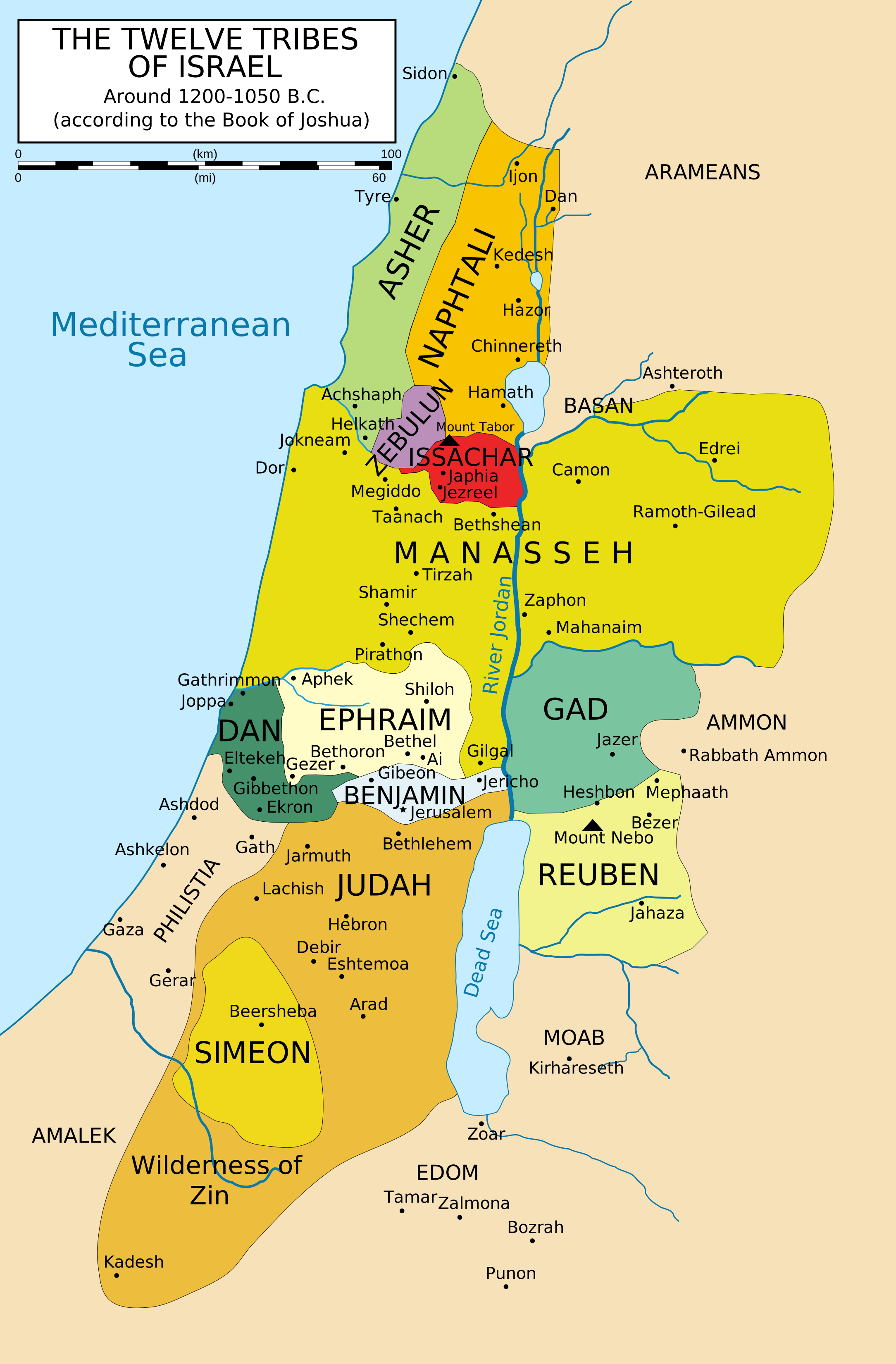
Although the second youngest son, Joseph was second to Judah in importance (Gen 49v22-26). So the allotment given his tribe comes next, divided between his two sons (the two half-tribes). Benjamin’s might follow simply because their territory comes between that of Judah and Joseph (18v11). Again, we see the allocation is done by lot, and that potentially contentious allocation is detailed (17v3-6).
            What stands out however, is Israel’s failure to fully take the land. Ephraim didn’t “dislodge the Canaanites living in Gezer” who remained amongst them doing forced labour. Likewise, Manasseh were unable to occupy certain towns, and when stronger could also only subject the Canaanites there to labour. Moreover, when the people of Joseph requested more land because they were so numerous, they held back from taking the land Joshua said they could have because the Canaanites had “iron chariots.” So the continual taking of the land is put very much down to Joshua’s faith and courage rather than the peoples’. He responds that Ephraim and Mannaseh are “numerous and very powerful,” and “will have” this extra land, encouraging them that they “can drive” the Canaanites out.
One thinks of Christ sending out of his disciples or Paul’s encouragement of Timothy that God did not “give us a spirit of timidity, but a spirit of power, of love and of self-discipline” (2 Tim 1v7). As our future inheritance is essentially “the earth” (Matt 5v5), an equivalent work to Israel driving out the nations and doing this fully is our work in evangelism and in ensuring the church is completely rid of the beliefs and behaviour of the world. Whether church leaders like Timothy or not, in God’s strength we are all called to be ambitious in this, giving ourselves unreservedly to it. And as we face an increasingly secular culture, we should not shrink back as the Israelites did, but recognize that God will build his church nevertheless.
            Chapter 18 begins with Israel gathered at Shiloh and setting up the Tent of Meeting there. This is the first specified “place of God’s name” – as Deuteronomy put it. In that context, we’re told “the country was brought under” Israel’s control. The picture then is of Israel finally settling with a degree of stability and peace, and God’s presence firmly in the heart of the land, rather than roaming. How much more stable, once Christ, the ultimate place of God’s presence sat down at his Father’s side. It signalled that his work was completed, and all he promised certain (Heb 1v3).
             This is not however the case for Israel. Joshua displays some frustration that seven tribes have still not received the land God “has given” them. So he asks the people to appoint three men from each tribe to survey and describe the land. Joshua will then allocate it by lot “in the presence of the LORD” at Shiloh. Throughout then, we are reminded that because we also tend towards faithlessness and fear, being slow to act and quick to leave the work of the kingdom only partially done, we need Christian leaders to keep us to the tasks mentioned above, not just encouraging us, but sometimes directing and organizing us. But we should note too, that things should not be this way. Rather, as Joshua would have preferred, we can take the initiative - to the delight of our leaders!

Praying it home:
Thank God that for the leaders he has given you and the church in general, to keep you to your task. Pray that you would not shrink back or be slow to serve, but delight your leaders by being forthright in evangelism and ministry within your church.

Thinking further:
None today.

If you receive this post by email, visit bible2014.blogspot.co.uk and make a comment.

Tuesday, 25 March 2014

(85) March 26: Joshua 14-15 & Luke 4:33-44

Ask God to open your mind, heart and will to understand, delight in and obey what you read.


To discover:­­
As you read consider why this detail is included.

To ponder:
Finally the land west of the Jordan is received as it is allotted to the nine and a half tribes. This is done by “lot” stressing God is apportioning it. Having it witnessed by the High Priest, Joshua and the “heads of the tribal clans” also affirmed it was being done fairly. Because the Levites’ inheritance is their work and its provision, all they receive are their towns and the surrounding land for their livestock (Num 35v1-5).
            Caleb is described as a “Kenizzite” which would make him a Canaanite (Gen 15v19). However 14v1 suggests he is from Judah so the word may mean he was just a descendent of someone called Kenaz. He recounts God’s promise that he receive the “hill country” he spied out forty years previously (13v17). It is repeatedly stressed that this is because he (and Joshua) followed God “wholeheartedly.” Indeed, Caleb affirms he is as “strong” and “vigorous” for battle at eighty five as he was then, expressing the very faith Israel previously lacked with respect to driving out the Anakites (Num 13v28)! No doubt this portrays Caleb as displaying the very attitude Israel should. Caleb therefore looks to Christ, who readily and courageously gave his life in wholehearted service of God, that we might possess our future inheritance. Moreover, it challenges us as those in Christ to readily expend our energies for God’s kingdom in the same way.
            Once more affirming Caleb, Joshua blesses him and gives him Hebron. And we read a second time “the land had rest from war” completing Joshua’s endeavours. The allotment of the land to the rest of the tribe of Judah is then outlined first, assuming their supremacy according to Jacob’s blessings, after Reuben, Simeon and Levi’s disqualification due to their sin (Gen 49v3-9). The detail is necessary to protect against future disputes. It also brings home how God fulfilled his promise by giving the land.
Particular space is given for how Caleb overcame the Anakites, leading to land being given to his courageous brother and his wife (Caleb’s daughter). Strikingly the chapter ends noting by contrast that “Judah could not dislodge” those “living in Jerusalem.” Once more this looks to Israel’s failure to completely take the land, with the ensuring danger of being led astray. By doing so, it would have urged future generations to emulate Caleb and Othniel as we’ve already mentioned.

Praying it home:
Thank God that because of Christ’s courageous sacrifice, he will certainly raise us from death to inhabit the new creation. Pray that we would serve him wholeheartedly and courageously now like Caleb and Othniel, ready to sacrifice ourselves for the building of his kingdom.

Thinking further:
To see a map of the allotment of the land, click here.

If you receive this post by email, visit bible2014.blogspot.co.uk and make a comment.

Monday, 24 March 2014

(84) March 25: Joshua 11-13 & Luke 4:1-32

Ask God to open your mind, heart and will to understand, delight in and obey what you read.


To discover:­­
As you read consider why Joshua didn’t need to be afraid.

To ponder:
A “huge army” of a broad alliance comes against Israel. God promised Abraham descendents as “numerous as the sand on the seashore” (Gen 22v17). So describing this army that way stresses their equivalence to the people of God, and their threat to the promise. But, probably through a prophet (Deut 18v14-22), God again told Joshua “do not be afraid.” And he needn’t be: First, because God promised to hand the enemy over slain. Second, because God had brought about their hostility himself. He had “hardened” them so that they would not make a treaty with Israel, but rather be “destroyed” by the LORD in judgement – just as with Pharoah (11v20, Ex 10v1-2).
            Our struggle against the principalities and powers, and those who follow them, can bring genuine fear of falling into sin, of falling away from Christ, or of hardship or persecutions inflicted on us or our families. As with Israel, we cannot expect to pass into our inheritance without a battle, nor without some wounds. But we need not fear as God has promised these enemies will be destroyed, and if we trust him, we will overcome. Moreover, we know that even their hostility is somehow part of his purpose (Eph 1v11). Indeed, Paul writes that just as with the Canaanites, God hardens those who reject the truth by sending them “a powerful delusion” so that they will be rightly “condemned” for their sin (2 Thess 2v11-12).
            In defeating this alliance it is repeated that Joshua did just as “the LORD commanded.” 11v13 probably refers to the fact that although their cities were destroyed, only Hazor was burnt, so the mounds (or ruins) of the others could be inhabited (Deut 6v10).
            There are hints that the lists of kings and perhaps battles in Joshua is not exhaustive. And we learn Joshua “waged war…for a long time.” Nevertheless we are told he “took the entire land,” which then “had rest from war” (11v16, 23). However, after the defeated kings east and then west of the Jordan are listed, 13v1 tells us that God told an elderly Joshua that “there are still very large areas of land to be taken.” So although Joshua brought the land under general Israelite control, it was down to future generations to bring about the complete defeat of its peoples. Indeed, God had promised it would take time (Deut 7v22).
            To different degrees this is the experience of Christians. Until Christ returns our work of evangelism will never be completed, nor our battle with sin. We can never sit back and declare “job done.” We must keep waging war against the evil one by preaching the gospel to others and holding to it ourselves, for it alone is the power of God for salvation.
            After an outline of the land to be taken God again promises to “drive out” those from certain regions. He then stresses that all “this land” (ie. 13v2-6a) must be allocated to the nine and a half tribes due to settle west of the Jordan, and as instructed. The allocation of the land east of the river to the other two and a half tribes is then outlined. But, with a hint at Israel’s failure to properly complete the task, we read of those not driven out who continue to live amongst them (13v13) - a potential snare (Deut 7v16). Levi’s inheritance comprises not land, but their privileged service of God (13v33) and “the offerings” made by fire. This may refer to the portion of the grain offerings the priests received, or the tithes the Levites received to maintain them as they looked after everything involved in offerings.

Praying it home:
Thank God that although we may suffer as Christians, we need not fear being overcome. Pray for Christian you know who are suffering or being persecuted, that they would be confident of this, looking to the Lord to fight for them.

Thinking further:
For the NIV Study Bible introduction to Joshua click here.

If you receive this post by email, visit bible2014.blogspot.co.uk and make a comment.

Sunday, 23 March 2014

(83) March 24: Joshua 9-10 & Luke 3

Ask God to open your mind, heart and will to understand, delight in and obey what you read.


To discover:­­
As you read consider what is and isn’t commendable about Joshua’s dealing with the Gibeonites.

To ponder:
“All” the kings west of the Jordan form an alliance against Israel – except for the Hivites living in the city of Gibeon. Deuteronomy 20v10-15 required Israel to offer peace terms to more distant cities, so the Gibeonites send a delegation who by disguise and deceit imply they have travelled a large distance, and persuade Joshua to make a “treaty” with them. Here Joshua failed to apply God’s law in two ways: He did not inquire of the LORD through the Urim and Thummim (Num 27v18-21), and was quick to make an “oath.” For this reason Israel did not uncover the “ruse” and so could not destroy the Gibeonites for fear of God’s “wrath” actually coming upon them for breaking their oath. Instead they put the Gibeonites to labour (Deut 20v11) at the “house of God,” cutting wood for burning on the altar, and carrying water, probably for the purification rituals (9v23, 26). There is irony here. This is Noah’s curse on the Canaanites (Gen 9v25). But by it they experience the blessing of serving God’s house.
            In building the kingdom, the Christian faces numerous complexities requiring a godly response. These require much prayer for wisdom (Jam 1v5-8) and seeking God’s will in scripture to know the best way forward. Moreover, if a bad decision has been made, this doesn’t justify disobeying God’s will in some other area to rectify it, especially in breaking commitments made to non-Christians, which inevitably compromise one’s witness. Israel’s faithfulness to the oath would have proved the integrity of the people and been an encouragement to truly distant cities to seek a treaty with them.
           Hearing of all this, the kings of various other cities formed an alliance to attack Gibeon. It seems they worried that the Gibeonites might now assist Israel (10v2). Gibeon then asked Israel for help and Joshua honoured their treaty. He took his “entire army,” but was reassured by the LORD not to be afraid for he had given them into Joshua’s hand. Three times it is stressed God fought for Israel: He threw the enemy into confusion, “hurled large hailstones down on them from the sky,” and in response to Joshua’s request to the sun and moon, doubled the period of sunlight so that Israel could finish the job! It is then declared “Surely the LORD was fighting for Israel!”
            In the clear up, the five kings were blocked into the caves in which they were hiding whilst Israel destroyed their armies. But a few escaped, leaving us wondering if Israel will ever fully conquer the land.
            As Israel return camp, the picture is of peace in which “no-one” uttered a word against Israel. The Kings are brought forward. Joshua gets his commanders to put their feet on their necks as a memorable illustration that they need not fear but must be courageous as God will do this to all their enemies. The Kings are then killed in line with those under God’s curse (Deut 21v22-23), and the utter destruction of Makkedah and the other southern cities is recounted – all as God “commanded.” The astonishing nature of this is stressed. Joshua “subdued the whole region” in “one campaign.” And all “because the LORD, the God of Israel, fought for Israel.” They then returned to Gilgal.
            Once more this affirmed Joshua as God’s chosen leader and encouraged Israel that they could achieve absolute victory if God fought for them. Again, we can be encouraged of the absolute victory God has achieved over sin, death and the devil, and will bring to completion when Satan is finally crushed under our feet (Rom 16v20). That victory is also won by his governance of creation, but in resurrection and re-creation.

Praying it home:
Thank God that he exercises all his power to ensure absolute victory of his enemies. Pray for wisdom about how to act in a godly manner in your interaction with non-Christians.

Thinking further: The sun standing still
This event has led to much speculation. Some suggest 10v12-13 is just a poetic way of describing how the victory was brought about through an “all-night march” (so unhindered by the moon) and a day long battle (the sun standing still). However, the text must determine our understanding, and there are numerous suggestions this event is being portrayed as a literal miracle. It is stressed Joshua’s command is said in Israel’s presence and the event recorded in the “book of Jashar” as if to highlight there were two witnesses to its occurrence. Moreover, v13b-14 restate the event in non-poetic language and explicitly state there has never “been a day like it” when the LORD listened to someone like this. Furthermore, if the language was just describing Israel’s endeavours by night and day it was hardly proof of God fighting for Israel, nor more impressive than the raining down of hailstones.
So it seems we must understand that the day was in some way literally extended and the night delayed in response to Joshua’s words. Indeed, there are some records from other ancient cultures that suggest exactly this. Although an actual slowing of the earth’s rotation would have huge repercussions on weather, ecosystems and life, it is quite possible for the God who “sustains all things by his powerful word” (Heb 1v3) to ensure it didn’t. However, we do not need to presume this was how this miracle was affected. The language could describe the continuance of light and absence of darkness due to some astronomical phenomenon, or even the display of God’s glory that will mean there is no need for a sun in the new creation. There is always a danger that Christians tie themselves in knots trying to explain miracles. The point is that God is “able to do immeasurably more than all we ask or imagine” (Eph 3v20), and so can certainly complete his defeat of all evil and our establishment in our own inheritance, the new creation.

If you receive this post by email, visit bible2014.blogspot.co.uk and make a comment.

Saturday, 22 March 2014

(82) March 23: Joshua 7-8 & Luke 2:25-52

Ask God to open your mind, heart and will to understand, delight in and obey what you read.


To discover:­­
As you read consider how these events differed from the taking of Jericho.

To ponder:
“But” causes the heart to sink as chapter 7 begins. So soon, Israel compromise in unfaithfulness. Due to their unity as a people, in which all are responsible for one-another, God’s anger burns against the nation because of the sin of one man. Ai should have been taken easily. Only a few men would be needed. But Israel are “routed.” Having expected God to bring victory as easily as in Jericho, this left the people despairing and Joshua mourning. He reasons this will embolden other nations to destroy Israel, keeping God’s name from being honoured through them.
            Like Joshua we can despair too quickly when our plans for the mission of the church don’t go as we hoped. But this doesn’t mean the church will fall. God’s rebuke of Joshua shows he should have recognised there was a reason God didn’t bring victory. And in this case it was sin. God’s covenant had been violated as he hadn’t been loved, his specific commandment about devoting everything to the LORD hadn’t been obeyed (Deut 20v10-18), and the commandments against theft and covetousness had been broken (7v11, 21). Just as our sin can hinder our prayers, so it can hinder what God might do through us (Jam 4v3). Indeed, unless the church wears the “breastplate of righteousness” it will not stand against the devil schemes (Eph 6v11, 14).
            God’s selection of Achan’s family was probably by lot. He is urged to glorify and praise God by speaking the truth. Achan, is then stoned, followed by his children and animals. They, the booty and all else he had was then burned and buried. The destruction of the children is hard. This is as punishment on Achan not them, and so does not preclude the possibility of their ultimate salvation. As seen previously, the equivalent purification within the church is through excommunication or repentance (1 Cor 5v1-13).
            With the sin duly dealt with God now affirms he has “delivered” Ai to Joshua, who should not fear. But something fundamental has changed. Israel are now allowed to keep the plunder. Knowing their liability to unfaithfulness, this seems to be a merciful accommodation to their weakness, keeping them from future disobedience over plunder, and so from defeat. Similarly Jesus stated God permitted certain things because “their hearts were hard” (Matt 19v8). This same patience holds back God’s final judgement (Rom 2v4).
Israel are also not given as easy a victory as previously. Rather than causing the walls to collapse, they have to engage strategy to entice the people out of the city. We already see a hint then, that because of their sin, the people are not going to take the land quite in the way intended.
The space given to this event builds the tension towards victory, bringing home the point that it is only if sin is dealt with that God will enable Israel to overcome. Indeed, his commands and directions in the battle are stressed (8v8, 18). As instructed, the plunder was kept but the city destroyed. The king was hung on a tree as a sign of being under God’s curse, taken down at night to keep the land from being contaminated (Deut 21v22-23), and covered in rocks. As with Jericho, the permanent “ruin” of the city speaks of the coming everlasting destruction.
Some time later the people reach the centre of the land and fulfil Moses’ instructions in Deuteronomy 27v11-26 (8v30-33). This solemn recounting of the entire law, around the ark of God’s presence and with its blessings and curses, stressed all the more the need for absolute obedience if the land is to be wholly possessed.

Praying it home:
Thank God that although he will judge all sin, he is patient even with unbelievers. Turn from any particular sins in your life, asking God to enable you to obey so that he might use you fully.

Thinking further: The Holy Wars
Once more we are faced with God’s command to totally destroy an entire group of people. We should first acknowledge that our feelings here are not unjustified. In truth, they reflect God’s own attitude as one who takes no delight in the death of the wicked, but desires instead that they turn and live (Ezek 18v23). However, we should not let these feelings keep us from thinking biblically and with perspective about these wars. They are shocking. However the Canaanites were not just the same as any other people. We are told their sins had become particularly severe, warranting their destruction in judgement (Gen 15v16, Deut 9v4-6). Some of those sins are listed in Leviticus 18, and include extreme sexual depravity and even child sacrifice. Witnessing the destruction of the Canaanite peoples should sober us up when we see similar sins committed in our culture, but drive us to repentance too, knowing we all deserve condemnation. And we must recognise that God’s judgement on the Canaanites is still on a much smaller and milder scale than the flood or the final judgement that Christ will execute. Moreover, Rahab’s response shows it is quite possible that amongst those killed in these wars there may have been some who looked in faith to Israel’s God, and so ultimately received salvation.

If you receive this post by email, visit bible2014.blogspot.co.uk and make a comment.

Friday, 21 March 2014

(81) March 22: Joshua 4-6 & Luke 2:1-24

Ask God to open your mind, heart and will to understand, delight in and obey what you read.


To discover:­­
As you read note what God displays about himself.

To ponder:
The echoes of Exodus continue. After passing through the Jordan twelve stones (representing the twelve tribes) are taken from the middle of the river as a “sign” to future generations of what the LORD did. It is stressed “everything” is done as God commanded. 40,000 cross ready for “war,” with the tribes due to settle east of the Jordan in the front. After all are safe, the priests follow from the middle of the river where they were standing with the ark, and the waters return. This must have been astonishing to witness and clearly no coincidence. By this means God “exalts” Joshua, who is then “revered” like Moses. God also shows his power to “the peoples of the earth” and moves this generation of Israelites to fear him. Immediately we then read that “the hearts” of the Canaanite kings sank. No doubt this helped them to yield more quickly to Israel. God’s defeat of evil in the hearts of his people now serves as a witness to others of his power (1 Pet 2v12).
            Just as Israel left Egypt after the previous generation were circumcised and celebrated the Passover, so this generation do both, demonstrating that the goal of their salvation from Egypt has been reached. This is also seen the following day when the people first eat the “produce” of the land and find God’s provision of manna stopped.
By being circumcised Israel keep the covenant with Abraham, affirming it is being fulfilled, and ensuring all are right with God before looking to him to fight for them. By declaring this “rolled away the reproach of Egypt” God declared it marked Israel as finally free and even purified from their time in Egypt, ready for their new life in the land. Baptism marks a similar dying of the old self and coming alive as a new creation (Col 2v9-15, 2 Cor 5v17).
The people are camped just east of Jericho at Gilgal. As Joshua goes near the city, he mysteriously meets an angelic “commander of the army of the LORD.” In repeating God’s words to Moses at the burning bush, it seems he represents the presence of God himself. This would have reassured Joshua greatly that God fights for him. And the theme of assurance runs through the next chapter as God declares he “has” delivered Jericho to him.
The seven day encirclement may hint of the days of creation, signifying that the land is just that for God’s special people. For six days the armed men march round once, with seven priests following in front of the ark, representing God’s presence. On the seventh day they do this seven times, with the priests blowing the trumpets, and ending with a long blast and a shout from the people that topples the walls. God had instructed Israel previously to sound trumpets on entering battle so that he remembers and rescues them (Num 10v9). And the “shout” was probably a cry of victory (Num 23:21, Jos 6v16). It is that easy for God to defeat his enemies.
The detail stresses God’s instructions were carried out, and Jericho devoted to him: the people killed, the valuable items put in God’s treasury and the city and all else in it burned. Only Rahab and her family are saved. Initially they are put outside the camp as ceremonially unclean, but then live “among the Israelites.” 6v25 signals that the book was written in her lifetime.
Joshua’s curse displays the absolute nature of God’s judgement. Jericho could be used for inhabitation (18:21), but not be properly re-established as it once was (1 Kgs 16v34).

Praying it home:
Thank God that we are new creations in Christ. Pray that you would trust God always to fight for you against the world, the flesh and the devil.

Thinking further:
The appearance of the “commander of the army of the LORD” is intriguing. Elsewhere we see that there is some sort of correspondence between what goes on in the angelic realm and the affairs of nations on earth. Indeed, in Daniel 10v12-14 the word “prince” is the same as “commander” here. However, this individual looked so like a man that Joshua simply quizzed him. Yet hearing who he was, he revered him as one should God. Moreover, the instruction to take off his sandals suggests Joshua is as close to God as Moses was when at the burning bush. The “man” may therefore be “the angel of the LORD,” or even the pre-incarnate Christ. Whatever, by taking the form he did with drawn sword and describing himself as the “commander” of God’s armies, he is reassuring Joshua that God fights for him.

If you receive this post by email, visit bible2014.blogspot.co.uk and make a comment.

Thursday, 20 March 2014

(80) March 21: Joshua 1-3 & Luke 1:57-80

Ask God to open your mind, heart and will to understand, delight in and obey what you read.


To discover:­­
As you read note the parallels between Joshua and his acts, and Moses and his.

To ponder:
With Moses dead God’s call to Joshua to “get ready to cross the Jordan” readies us for God to fulfil the next stage of his promise to the patriarchs. Just as Abraham paced the land and was told its borders in his dream, so God will give Joshua “every place where you set your foot,” outlining the territory. And the language that ended Deuteronomy is repeated: None will stand against him. God will never “leave” him nor “forsake” him, and he is to be “strong and courageous.” Here we see Joshua exemplifying everything that might be said of or to the nation. Indeed, he is not to turn right or left from the law, but keep it in his mouth, meditate on it and carefully obey it with the promise that he will be prosperous and successful. The principle is that God brings his people to their inheritance by a righteous leader they must obey and emulate.
            Joshua commands the people to get ready, urging the two and a half tribes due to live east of the Jordan to fulfil their commitment to help the rest possess the land. Having been affirmed as Moses’ replacement by the LORD, Joshua is then affirmed by their commitment to obey him, “just as we fully obeyed Moses,” and put those who rebel to death. So we heed the call of Jesus (the greek for Joshua) to establish his kingdom through his word.
            At the heart of the Rahab story is her confession of faith (2v9-13). God’s intent that the nations know that he is the LORD has been fulfilled. They have heard of the Exodus and Israel’s victories, and are fearful. And Rahab at least can say “the LORD your God is God in heaven above and on the earth below” – ie. he is God of everything. For this reason, patterning our response when hearing of God’s deeds in Christ, she knows that God’s judgement on her city is certain and asks for kindness and salvation for her and her family. Their later salvation shows that although God commanded that every person living in these Canaanite nations were be destroyed, he was nevertheless willing to save those who looked to him in faith.
Strikingly, this salvation comes only because the spies speak to Joshua and he later orders it (6v22). And so we see a particularly sinful non-Jew saved from judgement by calling on God’s agent of judgement and salvation. And what grace and encouragement that this prostitute not only takes her place amongst those listed as models of faith for us (Heb 11v31), but is an ancestor of Christ himself (Matt 1v5). Whatever our sin, this is how fully the believer is accepted by the Lord.
            The events pattern the Exodus, not only affirming Joshua, but God’s continual readiness to fulfil his promises to this generation. Rahab brings her family into her home and puts a scarlet cord in the window just as the Israelites had to remain in their homes and cover the doors with blood. And so this Gentile family experience their own passover. Israel then follow the presence of God signified by the ark just as they followed the pillar of cloud and fire, and they cross the Jordan as they did the red sea. And the latter was a particular sign: First, it accredited Joshua, exalting him “so they may know that I am with you as I was with Moses.” Second, it affirmed that “the living God” was “among” Israel and so would “certainly” drive out the nations. So we are encouraged that with each generation God is no less ready to save.

Praying it home:
Thank God for his continual willingness to save even the worst of sinners. Call on Christ for the salvation of any children close to you, just as Rahab called on Joshua through the spies.

Thinking further:
God’s promise to Abraham (Gen 12-17) was to bless the world through one of his seed, by making Abraham into a great nation (people) who would live under God’s rule, inhabit a promised land (place), and be governed by future rulers. Abraham’s descendents have become the nation, and have received God’s law so they might live under his rule. The book of Joshua will now relate how they finally inherit the land. Moreover, like Moses, we see Joshua taking his place as God’s ruler, looking us forward to the Judges, Kings and ultimately to Jesus. He brings the nation formed, renewed and ruled by him, into the new creation.

If you receive this post by email, visit bible2014.blogspot.co.uk and make a comment.

Wednesday, 19 March 2014

(79) March 20: Deuteronomy 33-34 & Luke 1:24-56

Ask God to open your mind, heart and will to understand, delight in and obey what you read.


To discover:­­
As you read note what Israel learn about her future.

To ponder:
Between the instruction and then activity of Moses climbing Mount Nebo, we have his blessings (32v48-52, 34v1-8). Once more with poetry we’re reminded of God coming with his angels and in love to Israel. They are pictured as humbly receiving God’s law with Moses acting like a king. This is the ideal for God’s people.
Reuben is blessed with life and multiplication, and Judah with help against foes. But the focus is on Levi. Although not recorded, it is implied that the tribe didn’t share in the grumbling at Massah and Meribah. And they proved their qualification to watch over God’s word and guard his covenant when they put him first by executing his judgement even on their relatives (Exodus 17). It seems this is why the decision-making of the Thummim and Urim are entrusted to them. Their other tasks are to teach the law, and co-ordinate Israel’s worship. And Moses prays for them to be blessed and protected in this. Within the church too, it is those who have proved themselves who are to be given the greater responsibility (1 Tim 3:2-4, 10).
            Benjamin is blessed with security stemming from God’s love, and Joseph (comprising the two half-tribes) with the best of the land as “prince among his brothers.” This reflects the prominence of Ephraim in particular within the future northern kingdom of Israel. Indeed, reflecting Joseph’s blessing, Moses blesses Ephraim with more descendents than Manasseh. Zebulun and Issachar are blessed with prosperity from sea and sand, that leads to offering sacrifices, probably of thanksgiving. Gad is blessed with the good land he chose east of the Jordan, which is his because of his willingness to carry out God’s will by going ahead of Israel in taking the land. The future strength of a lion is promised Dan, and God’s favour and blessing are granted Naphtali. Finally Asher is promised special favour, living amongst olive trees (the oil) and in great strength and security.
            These blessings are those we’ve come to expect: increase, strength, security, abundance, wealth, and favour. And there is no doubt where they come from. They are Israel’s because there is “no-one” like her God, whose power and readiness to bless is seen in him being a king, riding on the clouds of the heavens “to help.” He is her “shield and helper” and her “glorious sword.” We can apply this wonderful language to ourselves as God’s people now. He effectively “rode” to help us in Christ, who will return on a horse named “faithful and true,” to defeat all God’s enemies (Rev 19v11). God’s love makes him swift to act for us.
            The book ends with Moses climbing Mount Nebo. In granting him a view of the land, God is portrayed as acting kindly so Moses would see what he had worked so hard to achieve. But, it is also stressed that his death is not due to ill health (34v7). It was the penalty for his lack of faith in Numbers 20v6-12, which kept God’s holiness from being honoured for his gift of water (32v51).
            Moses’ role has however passed to Joshua, marked by his being “filled” with the “spirit of wisdom” through the laying on of hands. This provides some background to the practice of laying on hands for the giving of the Spirit in the NT. The writer is however clear that despite Joshua’s leadership, since then the promised “prophet like Moses” (Deut 18v15) has not yet come. The book therefore ends looking later generations to a prophet and King (33v5) like Moses, who will speak God’s word and administer his will. Whoever else would rise to lead the nation, it is this man she really needs. And now he has come!

Praying it home:
Thank God for the coming so readily to our help in Christ. Reflect on the key lessons you’ve learnt from Deuteronomy and pray them home.

Thinking further:
Congratulations. We have now completed the Pentateuch, ie. the first five books of the Bible. This is sometimes known by the Jews as the “Torah,” which means “instruction;” although this term can also refer to wider Jewish teaching too. You may have noticed that these books are foundational to all else. They reveal God’s uniqueness, power and nature. They set out the redemptive framework for his wider interaction with human beings. And in what follows, the history books essentially recount the working out of his covenant blessing and curses on Israel, whilst much of the prophetic books are a record of their sermons in which the covenant and its terms were preached and applied to the situations in their day.

If you receive this post by email, visit bible2014.blogspot.co.uk and make a comment.

Tuesday, 18 March 2014

(78) March 19: Deuteronomy 31-32 & Luke 1:1-23

Ask God to open your mind, heart and will to understand, delight in and obey what you read.


To discover:­­
As you read note how Israel are to be reminded of their covenant commitments.

To ponder:
Moses prepares the people for his departure. He reassures them again that God will “cross ahead” of them, and “destroy” the nations as he did the Amorites, so the people “will” take possession of the land. Israel are therefore to be “strong and courageous,” not because of confidence in themselves, but because God “will never leave” them nor “forsake them.” Likewise, Christ’s promise to be with his people even to the end of the age emboldens them to spread his kingdom throughout the world by preaching the gospel, no matter what spiritual or human enemies stand against them (Matt 28v20).
            With the people present to witness it, Moses charges Joshua in the same way, instructing him to divide the coming inheritance. In the light of the people’s grumbling about Moses, this was necessary so that they recognise Joshua as God’s chosen leader. God’s declaration at Jesus’ baptism and Christ’s later affirmation of the apostles are similar.
We then learn how the essence of Deuteronomy (and possibly Numbers) came into being. Moses writes the law down and gives it to the Levites - a pattern followed by the apostles as their deaths approached. The feast of tabernacles that ended the seventh year signalled a sort of re-booting of Israel in terms of the inheritance. So it is then that “all” the law is to be read to the assembly. Even the children were to “hear it” and so “learn to fear the LORD” – a gentle rebuke of those who argue things must always be brief and simple in church for children.
            Joshua is then commissioned in the visible presence of God and Moses. And God relates once more how Israel will forsake him for idols, bringing many “difficulties and disasters.” God therefore instructs Moses to write down and teach Israel a song to “testify” against her when she goes astray. This forms an early justification for music ministry. It is not just about praising God, but being reminded of his deeds and our response to them.
            The book of the law was also to be a witness, being placed beside the ark (which already contained the Ten Commandments) in the tabernacle (later temple). The book and song would be a constant reminder that what Israel experience because of her apostasy was just what God predicted. No doubt this would urge Israel to respond rightly as our Bibles and songs do.
            The song’s poetry is worth reflection. It brings home Israel’s history and future. Heaven and earth are first called to witness, with a prayer that God’s word would bring abundant life to Israel. God’s faithfulness is affirmed, making Israel’s corruption all the more serious. His care as Father and Creator in making and forming her (Jacob) is then outlined. The language reflects his purpose, protection and provision. And the past tense marks how certain the future is: Israel will reject and “forget” him for gods they hadn’t even known. In loving jealousy God will then reject them, bringing the promised disasters. But Israel will not understand this is all from God. He therefore calls them to “see” there is no God but him. And this will be proved by him bringing the nations to actually praise him for judging those he brought against Israel, and by his making “atonement” for the land and people. This great concern for Israel is of course fulfilled when, through faith in Christ, Jews and Gentiles join in “seeing” who God is, praising him and receiving atonement.
            Moses concludes affirming to Israel that the words of the song “are your life.” If they heed them, they will “live long in the land.”
           
Praying it home:
Thank God for the gift of music and musicians in helping you be reminded of God’s deeds and will. Pray that those who choose songs in your church would choose wisely, and that the church would learn from what they sing.

Thinking further:
Jesus referred to the first five books of the Bible (the Pentateuch or Torah) as the “books of Moses.” We need not understand this in a literalistic way. It is quite apparent some later editing has taken place (under God’s sovereign guidance). Later place names are inserted so later readers can locate places. And the book ends recording Moses’ death. However, as we have seen God instructed Moses to write the law down, and the sermons of Deuteronomy are obviously from him. There is no reason therefore to doubt that the content of these books is substantially Mosaic.

If you receive this post by email, visit bible2014.blogspot.co.uk and make a comment.

Monday, 17 March 2014

(77) March 18: Deuteronomy 29-30 & Mark 16

Ask God to open your mind, heart and will to understand, delight in and obey what you read.


To discover:­­
As you read note what is predicted about Israel’s future.

To ponder:
This covenant is “in addition” to that at Horeb (29v1). Its structure is the same, but detailing actual life in the land to the next generation. When referring to the Mosaic or “old” covenant, we are therefore referring to two agreements that combine to make one overall agreement (29v25).
            As previously, the present generations’ witness of God’s acts of deliverance and provision are appealed to as testimony that the LORD is God and to be obeyed. Significantly, we learn that God has not enabled Israel to “understand” what they’ve seen. The language of verse 4 looks to Jesus’ description of why people don’t recognise the significance of his feeding the four and five thousand (Mk 8v18). The point is the same. We should realise that Jesus is “the LORD” our God.
            It is stressed that Israel are in God’s “presence” as they are exhorted to “carefully follow the terms of this covenant.” He is witness to their commitment, and “seals” (guarantees) the covenant with “an oath” for future generations too.
            Once more Israel are warned against idolatry. Indeed, they are to keep one-another from turning away from the LORD, ensuring “no root” grows up to “poison” the community (as Heb 12v15).
            In particular, the people are warned against the self-delusion of assuming the covenant means they are “safe” even though they go “their own way.” Such people should instead be sure this will bring disaster on the land, and they will suffer God’s burning wrath and zeal, being “singled out” for disaster according to the covenant curses. This rebukes the assumption so prevalent in Jesus’ day and that so easily arises within the church.
            A prophetic description of Israel’s future follows: Future generations and foreigners will see the “calamities” that fall on the land. Ironically, it will be like Sodom and Gomorrah, which represented God’s judgement on Gentile sin. The nations will ask “why”? And the response will be that Israel “abandoned” God’s covenant, provoking his wrath.
Verse 29 affirms that mystery surrounds God’s purposes in all this, but that what he has revealed is to encourage Israel’s obedience. When scattered amongst the nations people will “take to heart” what’s happened, perhaps by recalling these words. They will return to the LORD and obey him wholeheartedly; and he will then restore them in compassion, and even “circumcise” their hearts so that they and their descendents “love” him and so “live,” obeying him and therefore prospering because he “delights” in them. This looks to the new covenant work of rebirth by the Holy Spirit (Ezek 36v25-34, Jer 31v31-35, Rom 2v29), in which sin is “cut off” from the heart, setting the person apart for God just as circumcision set them apart from the nations.
  As stated in verse 4, it is therefore only God who can make obedience possible. So it is not “beyond reach” requiring Israel to ascend to heaven as Moses on the mountain or cross a sea as the people did the red sea. It is “near” because God is near: in their “mouth” as they teach one-another his commands, and their “heart” if they look to him to do the inner work he promised. Paul points out this is essentially the gospel in which the Christian confesses God’s lordship in Christ, and believes he raised Jesus (Rom 10v5-10), implying faith in all that means for renewed inner life (Rom 6v4). Therefore, where Moses solemnly calls “heaven and earth as witnesses” in charging Israel to choose life (with echoes of Eden) so that she and her children “may live,” we should hear the call to “love”, “listen to”, and “hold fast” to Christ.
           
Praying it home:
Thank God for his work of regeneration by the Spirit that enables us to love and obey him. Pray that you would be faithful in seeking to keep not just yourself but others from turning away from the Lord.

Thinking further:
Ezek 36v25-34 and Jer 31v31-35 suggest regeneration or rebirth in its fullest sense is a new covenant work of God in which he permanently recreates our hearts so that they love and obey him in a way old covenant believers were never able to (John 7v37-39). Nevertheless, Deuteronomy 30v14 hints that God would always enable old covenant believers who look to him in faith, so that they could actually keep the covenant. This faith is exemplified in David’s prayer in response to a realisation of his own sin: “create in me a pure heart, O God, and renew a steadfast spirit within me” (Ps 51v3-6, 10). This tells us once again that it is quite wrong to hold that the old covenant was about meriting God’s favour by obedience whereas the new is about receiving it through faith. In making provision for atonement, the old clearly didn’t require perfection. As with the new, its obedience was always to be an expression of faith in God’s promises that looked to him for that atonement and for any ability to obey. As all these things foreshadowed Christ, it was therefore ultimately faith in him.

If you receive this post by email, visit bible2014.blogspot.co.uk and make a comment.

Sunday, 16 March 2014

(76) March 17: Deuteronomy 28 & Mark 15:27-47

Ask God to open your mind, heart and will to understand, delight in and obey what you read.


To discover:­­
As you read consider the categories to the blessings and curses.

To ponder:
This is a sobering chapter. The blessings and curses echo those of Eden, looking to those of eternity. The curses were eventually experienced when Assyria and Babylon conquered Israel. Here Moses says this would be a “sign and wonder” to God’s people forever (28v47) – proof that God will always bring to pass the judgements he warns of. So chapter 28 is for us to heed. For this reason, as with Jesus’ teaching, it gives more space to the curses. We must remember this reflects God’s loving concern for us.
            The word “if” sets the choice before Israel. “If” she “fully” and “carefully” obeys, never “turning aside” from God’s commands, she will be exalted “high above” all nations. This principle continues. Those who are “last” in God’s kingdom will be “first,” as Jesus was, because they act righteously by humbly serving God and others. This is the way to greatness before God.
            The blessings will fill the whole land, encompass every activity, and be seen in fruitfulness with respect to children, crops and livestock. God will therefore open the heavens to bring rain. And enemies will be soundly defeated, so that “all peoples” fear Israel. It’s a picture of prosperity and security, which will be ours too, when all evil is shut out of the new creation.
            The curses are not simply the absence of blessing, but an active bringing upon Israel their opposite. They too will be total, affecting the same areas. So the people will be frustrated in all they seek to achieve until they are eventually destroyed. This destruction will include illness, diseased crops, drought, defeat, afflictions of the skin patterned on the plagues of Egypt, and helplessness of the mind, meaning people will just not know what to do (28v29).
            In the context of war, people will lose their wives, homes, crops and animals. They, their children and even king will be shipped to other nations, where they will commit idolatry, whilst foreigners enjoy their land. Their crops will be ruined by locusts, worms, and disease, and “in hunger” and “poverty” they will serve their oppressors. Indeed, aliens will be exalted whilst Israelites sink lower. As Jesus said, those who exalt themselves in their pride and arrogance, will be humbled.
            It is stressed this is for the LORD to “put an iron yoke” of bondage on Israel’s neck. He will bring a nation against her like a swooping eagle, which will show no pity, devouring all they have and besieging all their cities. Cannibalism will result from the lack of food, in which all compassion for one’s family will be put aside by the desperation to survive. Moreover, “every kind” of sickness and disaster will be brought on Israel until the once numerous nation will be “few in number.” Scattered to the nations, the people will experience psychological and emotional despair as they worry about what they might face and long for what was, desperate that the sufferings of the moment pass. Hard as it is, Jesus’ affirms this same despair in describing the torments of hell (Lk 13v28-30, 16v22-24, Rev 14v10-11).
The chapter ends with Israel once more enslaved in Egypt. In other words, all that God has given will be removed, and they will experience the very judgements Egypt did (28v27).
This should all deepen our appreciation of what it involved for Christ to “redeem us from the curse of the law by becoming a curse for us.” And through true faith in him, none of this needs to be feared. On the contrary, he bore the curse “that the blessing given to Abraham might come to the Gentiles” (Gal 3v13-14)!  

Praying it home:
Thank God for his love displayed in Christ experiencing the equivalent of these things so that we could be saved from them. Pray for a greater conviction and honesty about the reality of judgement in churches and Christians.

Thinking further:
None today.

If you receive this post by email, visit bible2014.blogspot.co.uk and make a comment.

Saturday, 15 March 2014

(75) March 16: Deuteronomy 26-27 & Mark 15:1-26

Ask God to open your mind, heart and will to understand, delight in and obey what you read.


To discover:­­
As you read consider how conviction that God would give the land is expressed.

To ponder:
Moses sermon(s) stretches from chapter 5 to 26. Here it expresses utter certainty in God’s promise. We can talk of “when” we receive our inheritance in the same way.
            To mark the possession and settling of the “inheritance,” at the first harvest (and possibly every subsequent feast of Weeks/Pentecost) the firstfruits are to be taken to the tabernacle at “the place” God chooses. The Israelite is to recite given words, declaring to God before the priest that the LORD has brought him to the promised land, and recounting the miracle of how God created and redeemed such a great nation from Jacob - the “wandering Aramean.” The point is that Israel now have a fixed home! The Israelite is then to bow down as he lays the basket “before” the LORD. His household, the Levites and any aliens, should then rejoice in all God had given with a feast. When giving his tithe to the Levite, alien, fatherless and widow in the third year, he is to say to God that he has done this according to his commands, praying God would bless his people in the land from his real “dwelling-place” in heaven. Likewise, preaching to ourselves (and celebrating) our own story of redemption in Christ, keeps us thankful and full of faith.
            The sermon ends with a call to obey, and an affirmation of the covenant: The people have declared the LORD is their God and they will “walk” in his ways; and he has declared they are “his people” and “treasured possession,” that they are to “keep his commands,” and that they will be regarded more highly than any nation and be holy and so set-apart to the LORD. Peter declares these same things whilst reciting how God has redeemed us (1 Pet 2v9-10). And this is the basis for his call that we “abstain from sinful desires” and “live such good lives amongst the pagans” that they come to “glorify God” – ie. regard us highly to his credit. So our obedience is no less important.
            Moses and the elders now command the people to mark the beginning of their life in the land by setting up some stones on Mount Ebal, coating them in plaster and writing the law on them. This may have been the Ten Commandments, the whole book, or just the curses that follow. They are also to make an altar there, offer burnt offerings (for unintentional sin), sacrifice fellowship offerings (marking the peace achieved with God), and eating with joy “in God’s presence.” The sense is that the burnt offerings atone for sins against the laws written on the stones. As our sacrifice, Christ actually embodied the law, making full atonement so we could have fellowship and joy with God.
            Moses and the priests then silence Israel, affirming the need to obey now they are God’s people. Moses also commands that in the centre of the land the tribes are to be split between Mount Gerizim - to bless the people, and Mount Ebal - to curse them. The blessings are not recorded here. The curses to be spoken by the Levites seem to stress sins reflecting God’s main concerns: ie. idolatry, dishonouring parents, stealing people’s inheritance, abusing the needy, withholding justice, sexual immorality, and murder. The promise of curse is of God’s judgement even for “secret” sins (27v15,24), implying direct action from him against those whose sins are not found out by the people. By crying “Amen” to each, the people effectively accept the terms of the covenant. The NT also affirms severe punishment to those who keep sinning having received the gospel and taken their place in the church, for “the LORD will judge his people” (Heb 10v26-31).

Praying it home:
Thank God that our inheritance is so certain we can talk about it as ours, and ponder what will be “when” there. Pray that you and Christians you know would live such good lives that others come to glorify God.

Thinking further:
None today.

If you receive this post by email, visit bible2014.blogspot.co.uk and make a comment.

Friday, 14 March 2014

(74) March 15: Deuteronomy 23-25 & Mark 14:51-72

Ask God to open your mind, heart and will to understand, delight in and obey what you read.


To discover:­­
As you read consider what each law taught the people.

To ponder:
The laws continue. To “enter the assembly of the LORD” was to gather for worship at the tabernacle or temple. So those intentionally emasculated (probably in false worship) are excluded, as are ten generations born from “illegitimate marriages” (with prostitutes or close relatives), or born to Ammonites or Moabites, with whom Israel mustn’t make a treaty (because of their hostility). However, only two generations born to Edomites or Egyptians are excluded, due to their prior relationship with Israel. Such laws assumed foreigners would live amongst God’s people, and did not prohibit them from faith in the LORD. At the least, they stress that our response to the Lord now has implications for our posterity. Nevertheless, due to the full cleansing we have in Christ, all who repent immediately join the great assembly, no matter their history (Heb 12v22-24).
            Amongst Israelites, those with “nocturnal emissions” are temporarily excluded from the camp for a day, and the people are to go to the toilet outside the camp, covering any excrement. This is so the LORD moving about the camp doesn’t see anything “indecent” - confirming that uncleanness refers to what is inappropriate or unfitting for God’s holy presence.
            Countering the assumption that the Bible promotes slavery, 23v15-16 commands that escaped slaves be given sanctuary within Israel, living wherever they like and not being oppressed. One considers asylum seekers and slaves today. Israelites are then forbidden from becoming shrine prostitutes or using their earnings to pay for vows made to God. This reveals the hypocrisy of giving dishonest money to the church. Charging interest of fellow Israelites is also forbidden, the speedy keeping of vows commended, and the harvesting of other’s crops banned too.
            It seems divorce was permitted on the broad grounds of “indecency.” But remarrying a first husband having been divorced by them and then married and divorced by a second, is “detestable” (a very strong word), because the woman is “defiled.” Jesus suggests this may be because, although permitted, the second marriage was equivalent to adultery against the first husband (Matt 19v8-9).
            God’s care is seen in what follows: Newly-weds are not to be too busy for a year so they can enjoy their marriages! Security is not to be taken for debt that ruins someone’s means of earning. Those who kidnap and enslave an Israelite must die. Lepers are to follow levitical instruction. Assets given against debt aren’t to be forcefully taken, nor kept if the person is poor and needs them for basic living. Likewise, poor hired workers are to be paid daily so they don’t go without, or else cry to the LORD against their employer (Jam 5v4-6). And family members are not to be held to account for each others’ sin.
Because Israel had nothing as slaves and had to rely on God for redemption, the alien, fatherless and widowed in particular are to be ensured justice, not impoverished, and left the remains after harvest for themselves. We should consider the equivalent today (Jam 1v27). Disputes are to be brought to the judges at court, the punishment to be proportional, and no-one lashed more than forty times to preserve their dignity (perhaps as one in God’s image). Animals are to be allowed to eat from the grain they work, which Paul applies to ministers being paid (1 Cor 9v9-10).
If a man dies, his brother must marry his widow to maintain his name. Not to is shameful and to be acknowledged before the elders and wider community. A wife who grabs someone’s privates to stop him fighting her husband is to have the hand cut off. This is the only instance of such a punishment, providing a strong deterrent. It also stresses the seriousness of attacking someone’s ability to have children, because this was the means by which God’s promises were to be fulfilled.
Finally, business is to be conducted honestly (25v13-16). And after Israel settle, they are to blot out the Amalekites because of what they did in Exodus 17v8-14.

Praying it home:
Thank God that all with faith in Christ are full and equal members of his great assembly. Pray for wisdom on how these principles might be applied to your situation.

Thinking further:
As mentioned, Paul applies the fact that oxen are to be allowed to eat from the grain they work, to the right for ministers to receive pay from those they minister to (1 Cor 9v9-10). Once more this helps us apply the rest of the laws. It teaches that we are to look for the principle of love behind them, and relate it to parallel situations in which that same principle stands. So, the concern that the alien, fatherless and widow receive justice and are provided for, reflect the principle that those with none to stand up for or care for them should be particularly looked out for. We might therefore consider other categories today, such as the pensioner with no relatives or the unborn child; or the need for legal aid to be given to those unable to pay for it.

If you receive this post by email, visit bible2014.blogspot.co.uk and make a comment.